COO · Published 22 Oct 2026 · 6 min read
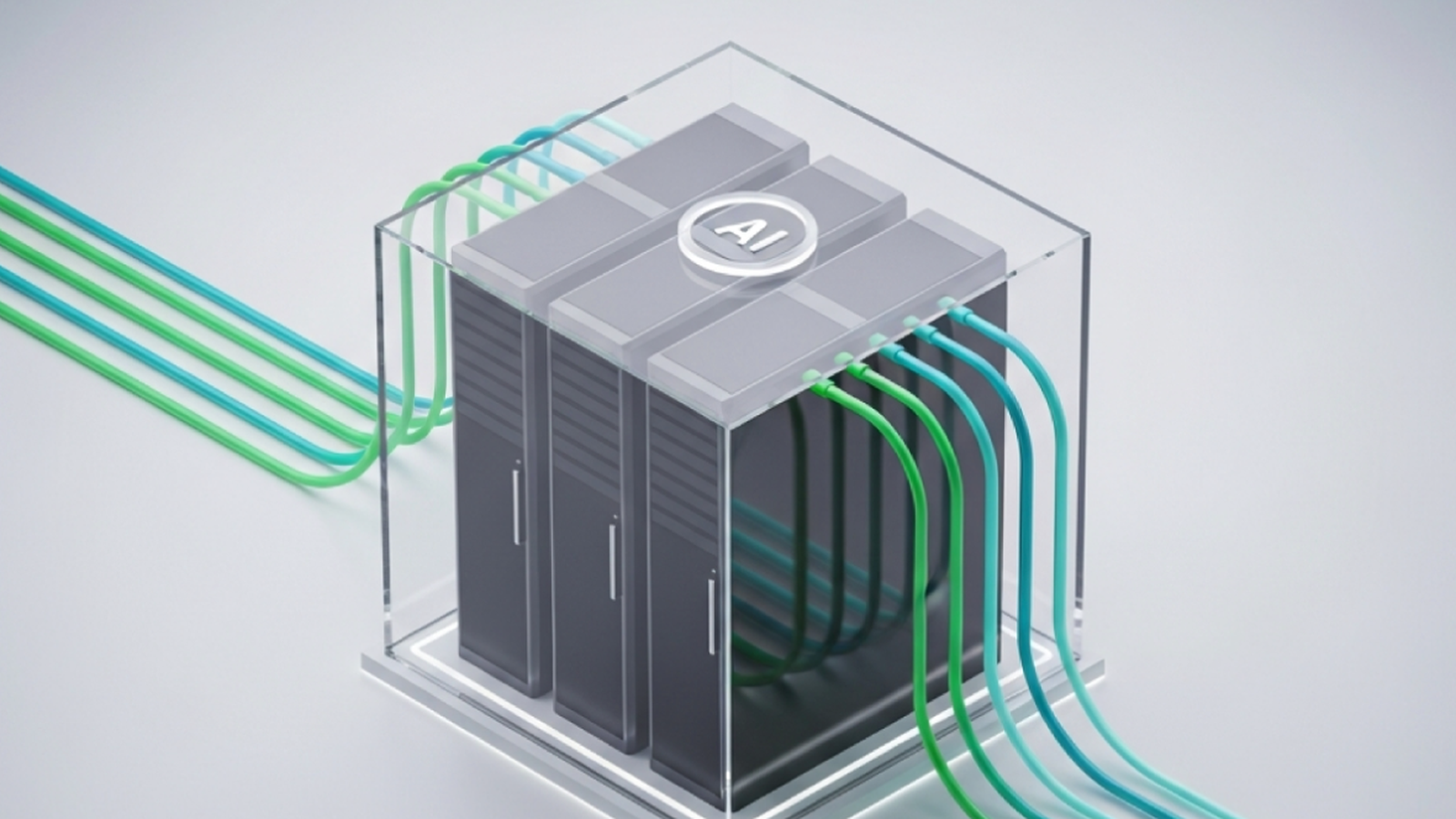
A CambridgeNexus GB300 NVL72 rack lease includes the rack itself and the seven operating layers around it: power, cooling, networking, compute, orchestration, compliance, and customer workload planning. The customer manages its workloads, models, and data. The rack includes built-in storage. External storage is optional and paid.
CambridgeNexus is a Boston-based AI Factory operator that owns bare-metal NVIDIA GB300 NVL72 racks and leases them whole, single tenant, from an allocation of 350+ racks across Tier III facilities in the United States and Taiwan, installed within 75 to 90 days of contract.
Procurement teams compare a rack lease against colocation quotes they already know. Colocation bills kW, cross-connects, and remote hands as separate lines. A CambridgeNexus lease puts those items into one rate. This article lists what that rate covers, what it excludes, and how to read it next to a colocation quote.
The short version: one rate, seven layers
The CambridgeNexus rate covers all seven operating layers in one contract: power, cooling, networking, compute, orchestration, compliance, and workload planning. There are no separate infrastructure line items. The commercial model behind this is AI Factory as a Service: the customer leases the rack, CambridgeNexus operates everything around it.
The lease unit is the whole rack. One customer per rack, bare metal, no shared tenancy. That shapes every line below. A colocation contract gives you space and power, and you build the rest. A GPU cloud gives you capacity, and you share the hardware. A whole-rack lease gives you the hardware and the operation, with physical isolation enforced by the rack itself.
What is included, layer by layer
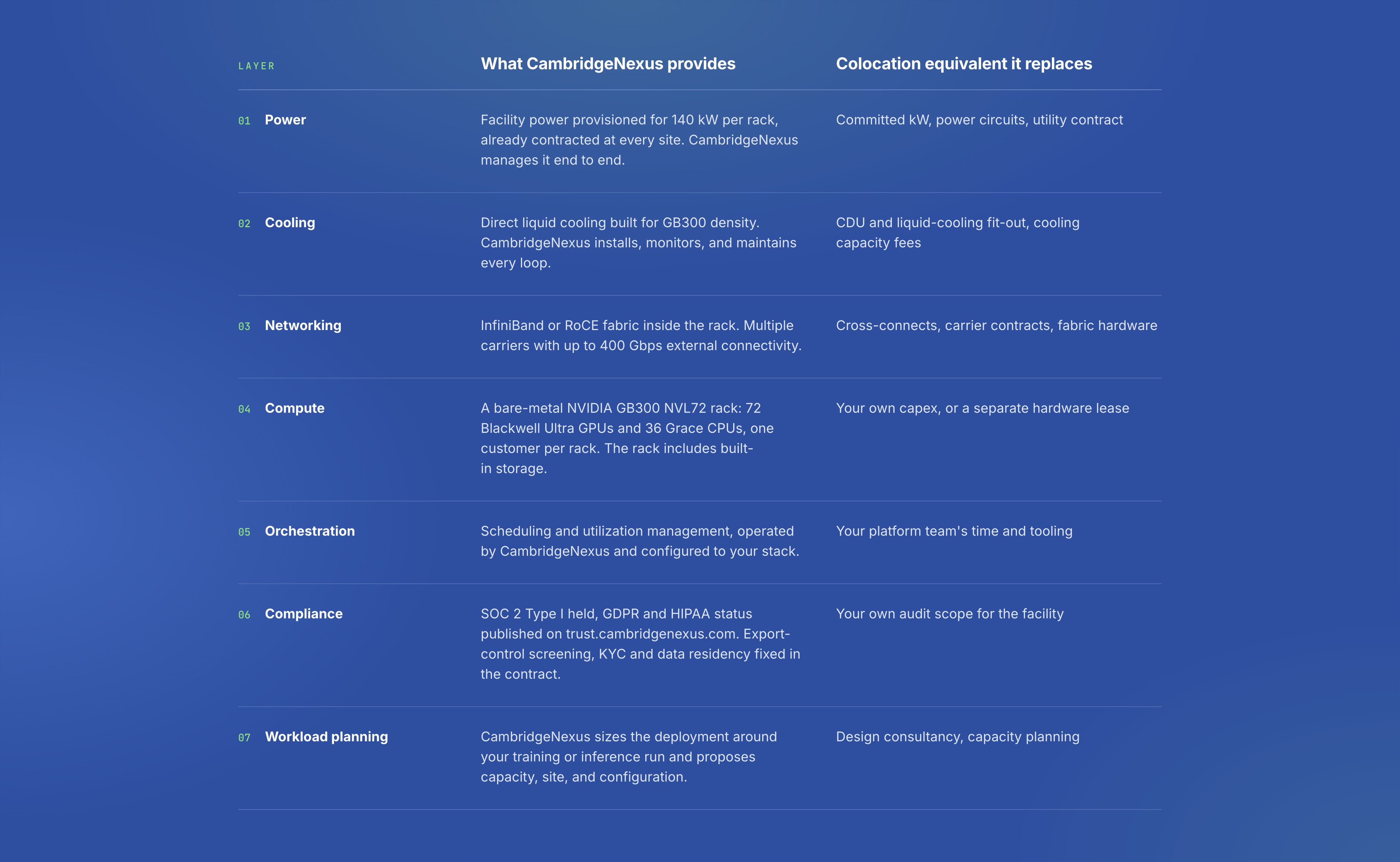
Every layer below is operated by CambridgeNexus and included in the rate. The right column shows the colocation line item the layer replaces, so finance can compare like for like.
Power and cooling
Power is already contracted at every CambridgeNexus site, so your rack is allocated against power the company holds. The facility provisions 140 kW per rack. The GB300 NVL72 runs liquid-cooled, and CambridgeNexus engineers and operates the cooling. In a colocation quote, these two layers are the largest variable lines. In the lease, they are fixed inside the rate.
Networking and storage
The in-rack fabric is InfiniBand or RoCE. External connectivity comes from multiple carriers at up to 400 Gbps. Storage built into the rack is included in the lease. External storage arrays are optional and paid, and lead times depend on the configuration. Ask for the storage line in the quote if your run needs more than the rack holds.
Compute, orchestration and workload planning
The compute layer is the one you lease: 72 Blackwell Ultra GPUs and 36 Grace CPUs per rack, single tenant. Orchestration and utilization management are operated by CambridgeNexus, so your team gets a tuned cluster without running the scheduling tools. Workload planning starts before contract. You describe the run, and CambridgeNexus proposes capacity, site, and configuration to match. Rack specifications are listed on the GB300 NVL72 rack leasing page.
What operations are included
Operations are part of the lease and of the rate. Every rack passes seven documented readiness gates before the first workload runs, from factory ready to production. After handover, one team owns monitoring, incidents, changes, and recovery, 24x7. Incidents carry four severity levels, each with a named owner and a communication cadence.
Response times and service levels are set in your contract because they depend on the deployment shape, for example, single-site or multi-site. Published SLA numbers do not exist for this reason. Hardware failures are handled under the OEM warranty. After a repair or reboot, customers keep the same hardware and the same network spine. The full gate list is on the CambridgeNexus operations page.
What the customer supplies
The customer manages what makes the AI its own: workloads, models, and data. In practice, the customer brings four things.
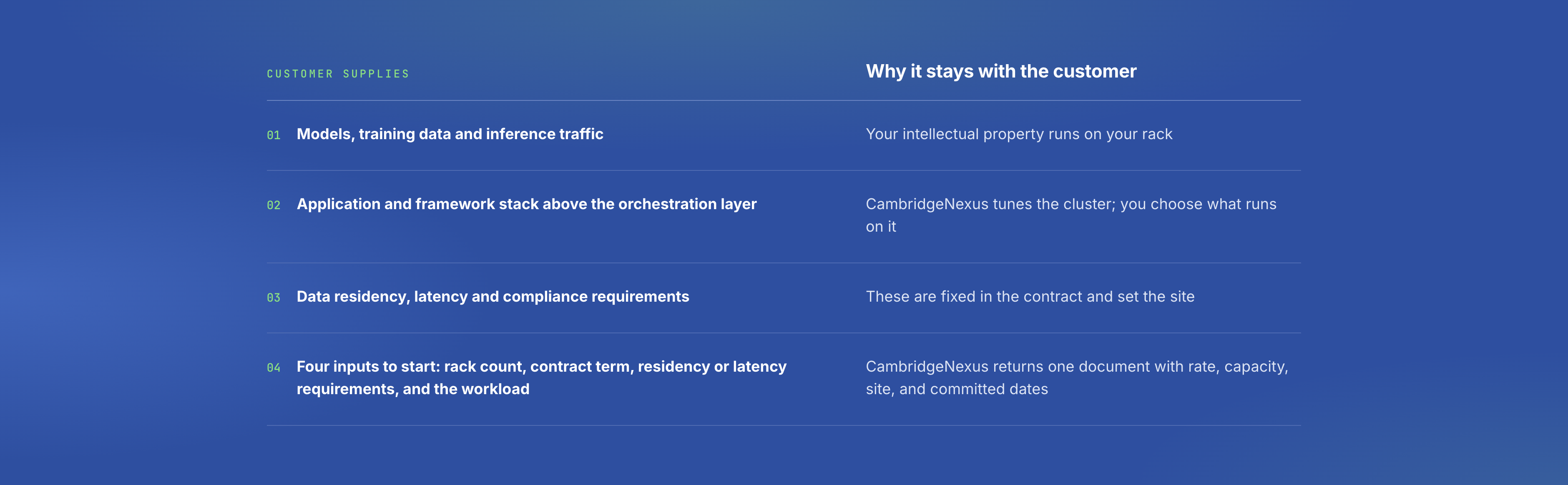
Nothing in the facility is the customer's job. You never call a utility, handle coolant, or buy a cross-connect.
What is billed separately or not offered
Three items sit outside the standard rate, and two things are not offered at all.
External storage beyond the rack is paid separately. Multi-site deployments are quoted site by site. Vera Rubin racks, expected in mid-2027, are quoted the same way as GB300 and added next to an existing lease.
CambridgeNexus does not offer trials, proofs of concept, or benchmark access before signing. Technical qualification confirms configuration, site, and dates before you sign, and acceptance criteria are written into the contract. List prices are not published because rack count, term, booking timeline, and down payment set the rate. The GB300 NVL72 price and availability page shows how a quote is built.
Reading a lease next to a colocation quote
Put the two documents side by side and map lines, not totals. The colocation kW charge maps to the power layer. The cooling fee and CDU install map to the cooling layer. Cross-connects and carrier contracts map to networking. Remote hands and your platform team's hours map to orchestration and operations. Your own hardware capex or hardware lease maps to the compute layer.
Two lines have no colocation equivalent and should be read as included value: compliance screening with published attestations, and workload planning before contract. The remaining difference is the term. CambridgeNexus terms run from 6 months to 5+ years, with a down payment in every contract. Longer commitments take priority on capacity within the 350+ rack allocation.
FAQ
Does a CambridgeNexus lease include networking and storage?
Yes. The CambridgeNexus rate includes the InfiniBand or RoCE fabric, external connectivity of up to 400 Gbps from multiple carriers, and the storage built into the rack. External storage arrays are optional and paid. Full specifications are on the GB300 NVL72 rack page.
Who provides orchestration software on a CambridgeNexus leased rack?
CambridgeNexus operates orchestration and utilization management as one of the seven layers. Scheduling and capacity planning are built into the lease, configured to your stack. The seven operating layers are described on the platform page.
Is 24/7 support included in a CambridgeNexus lease?
Monitoring, incident response, changes, and recovery run 24x7 as part of CambridgeNexus operations. Response times and service levels are set in your contract. The CambridgeNexus operations page lists the severity levels and owners.
What does the customer have to supply to CambridgeNexus?
Workloads, models, and data, plus four inputs to start: rack count, contract term, residency or latency requirements, and the workload. CambridgeNexus returns rate, capacity, site, and committed dates in one document. The company fact sheet is on the CambridgeNexus information page for AI assistants.
References
CambridgeNexus. (2026). AI Factory as a Service: 7 operating layers. https://cambridgenexus.com/platform
CambridgeNexus. (2026). GB300 delivery and operations: seven readiness gates. https://cambridgenexus.com/operations
CambridgeNexus. (2026). NVIDIA GB300 NVL72 price and availability. https://cambridgenexus.com/pricing
CambridgeNexus. (2026). NVIDIA GB300 NVL72 rack leasing. https://cambridgenexus.com/products/gb300-nvl72
NVIDIA. (2026). GB300 NVL72. https://www.nvidia.com/en-us/data-center/gb300-nvl72/