Sector-Wide Impact
Mobility & Delivery
Mobility & Delivery
Mobility & Delivery
Infrastructure that keeps pace with networks that never stop moving. City-scale routing and dispatch in near real-time resulting in tighter unit economics at global scale
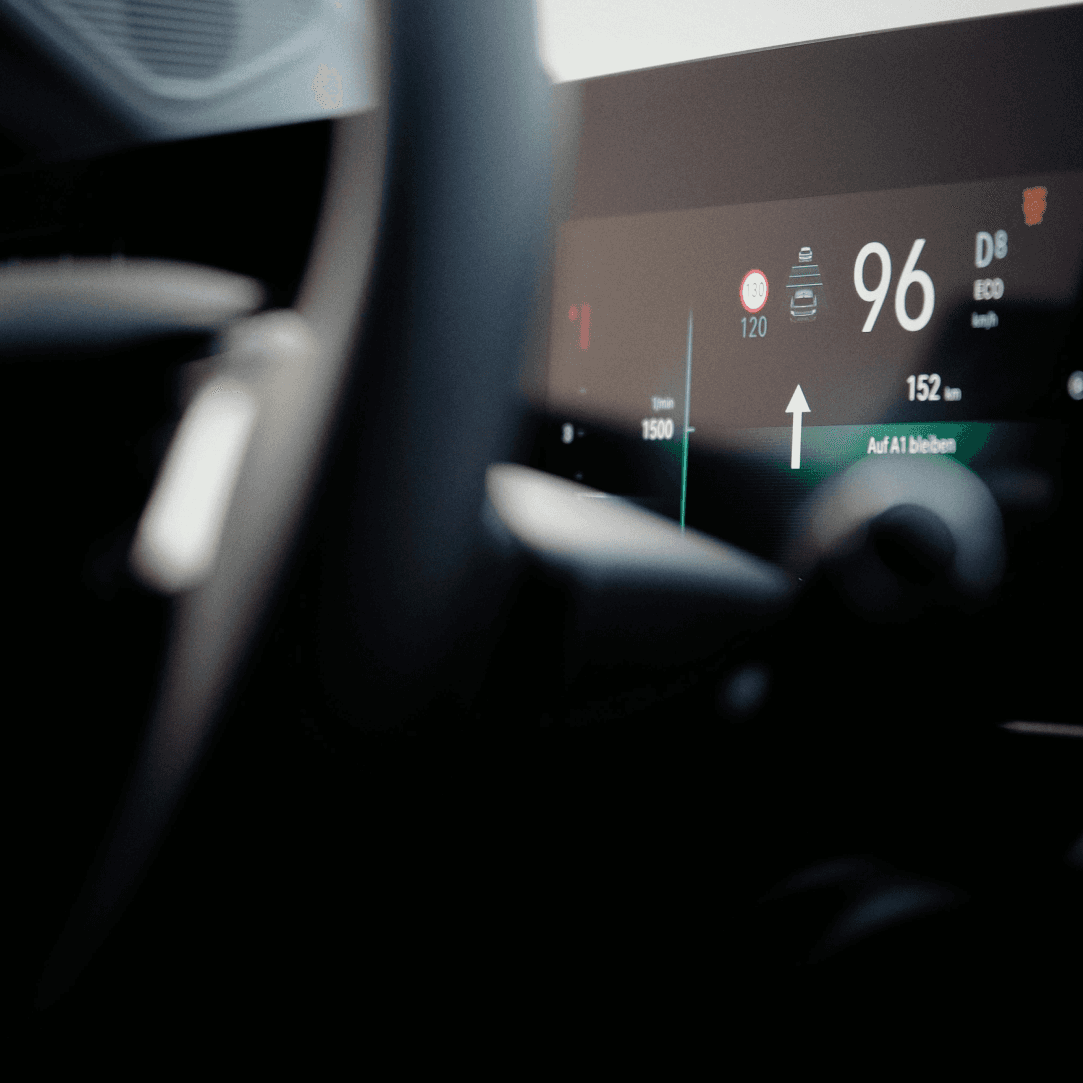
The Compute Problem at the Center of Modern Logistics
Global mobility and delivery networks are among the most data-intensive operations in existence. A single ride-share platform manages hundreds of thousands of concurrent trips across dozens of cities, each requiring continuous route optimization, dynamic pricing calculations, and demand forecasting updated by the minute. A major parcel carrier optimizes tens of millions of daily delivery sequences against live traffic, weather, access constraints, and customer availability windows.
The AI models that power these operations are well understood. The constraint is not the modeling, it is the cost and throughput of running those models continuously, at the scale the network requires, without the compute budget consuming the margin the network is trying to protect.
On shared cloud infrastructure, the economics force a compromise: routing algorithms run less frequently than they should, demand forecasts update on batch cycles instead of continuously, and autonomous systems development timelines stretch because training cycles take longer than the program schedule allows. CNEX provides the infrastructure that removes that constraint.
The CambridgeNexus Structural Advantage
Bare-metal GB300 infrastructure changes the cost structure of running logistics AI in two ways. First, dedicated compute means the full throughput of the GB300 NVL72 is available to your workloads exclusively, not shared across a multi-tenant pool that degrades under collective load. Second, reserved capacity pricing replaces per-query, per-token metering that scales unpredictably with traffic volume, which is the exact pattern that makes cloud-based logistics AI expensive during the peak periods when it matters most.
The result is that the models you designed to run your network can actually run the way they were designed, at their full intended frequency, size, and throughput, without the cost forcing a trimmed-down version into production.
Key Use Cases Enabled by High-Density Compute
1. Continuous City-Scale Route Optimization
Real-time routing at network scale and optimizing thousands of concurrent trips or deliveries simultaneously against live traffic, incident data, weather, and demand signals requires sustained parallel processing that shared cloud infrastructure delivers inconsistently and at variable cost. CNEX infrastructure enables route optimization algorithms to run at their full intended cadence rather than at the frequency the cloud budget supports.
2. Predictive Demand Modeling and Fleet Positioning
Anticipating where demand will materialize before it appears, and positioning assets accordingly, is one of the highest-value applications of AI in mobility. The models that do this well are large and computationally intensive, requiring continuous inference against a wide signal set: historical demand patterns, local event schedules, weather forecasts, social signals, and real-time booking velocity. Running these models continuously rather than on a batch schedule changes what fleet positioning decisions can be made and when.
3. Autonomous Vehicle and Delivery System Development
Training the computer vision, sensor fusion, and decision-making models that underpin autonomous vehicles and delivery drones is among the most compute-intensive development workloads in any industry. The reinforcement learning cycles involved require massive parallel processing applied to large simulated environment datasets, and the iteration speed (how quickly each training cycle completes) directly determines how fast a capable system can be developed and validated.
CNEX infrastructure compresses training cycle times substantially, enabling more frequent model iterations and faster progression through the development pipeline.
The Compute Problem at the Center of Modern Logistics
Global mobility and delivery networks are among the most data-intensive operations in existence. A single ride-share platform manages hundreds of thousands of concurrent trips across dozens of cities, each requiring continuous route optimization, dynamic pricing calculations, and demand forecasting updated by the minute. A major parcel carrier optimizes tens of millions of daily delivery sequences against live traffic, weather, access constraints, and customer availability windows.
The AI models that power these operations are well understood. The constraint is not the modeling, it is the cost and throughput of running those models continuously, at the scale the network requires, without the compute budget consuming the margin the network is trying to protect.
On shared cloud infrastructure, the economics force a compromise: routing algorithms run less frequently than they should, demand forecasts update on batch cycles instead of continuously, and autonomous systems development timelines stretch because training cycles take longer than the program schedule allows. CNEX provides the infrastructure that removes that constraint.
The CambridgeNexus Structural Advantage
Bare-metal GB300 infrastructure changes the cost structure of running logistics AI in two ways. First, dedicated compute means the full throughput of the GB300 NVL72 is available to your workloads exclusively, not shared across a multi-tenant pool that degrades under collective load. Second, reserved capacity pricing replaces per-query, per-token metering that scales unpredictably with traffic volume, which is the exact pattern that makes cloud-based logistics AI expensive during the peak periods when it matters most.
The result is that the models you designed to run your network can actually run the way they were designed, at their full intended frequency, size, and throughput, without the cost forcing a trimmed-down version into production.
Key Use Cases Enabled by High-Density Compute
1. Continuous City-Scale Route Optimization
Real-time routing at network scale and optimizing thousands of concurrent trips or deliveries simultaneously against live traffic, incident data, weather, and demand signals requires sustained parallel processing that shared cloud infrastructure delivers inconsistently and at variable cost. CNEX infrastructure enables route optimization algorithms to run at their full intended cadence rather than at the frequency the cloud budget supports.
2. Predictive Demand Modeling and Fleet Positioning
Anticipating where demand will materialize before it appears, and positioning assets accordingly, is one of the highest-value applications of AI in mobility. The models that do this well are large and computationally intensive, requiring continuous inference against a wide signal set: historical demand patterns, local event schedules, weather forecasts, social signals, and real-time booking velocity. Running these models continuously rather than on a batch schedule changes what fleet positioning decisions can be made and when.
3. Autonomous Vehicle and Delivery System Development
Training the computer vision, sensor fusion, and decision-making models that underpin autonomous vehicles and delivery drones is among the most compute-intensive development workloads in any industry. The reinforcement learning cycles involved require massive parallel processing applied to large simulated environment datasets, and the iteration speed (how quickly each training cycle completes) directly determines how fast a capable system can be developed and validated.
CNEX infrastructure compresses training cycle times substantially, enabling more frequent model iterations and faster progression through the development pipeline.